


Malachis are becoming a book – Title Reveal (LISTEN)
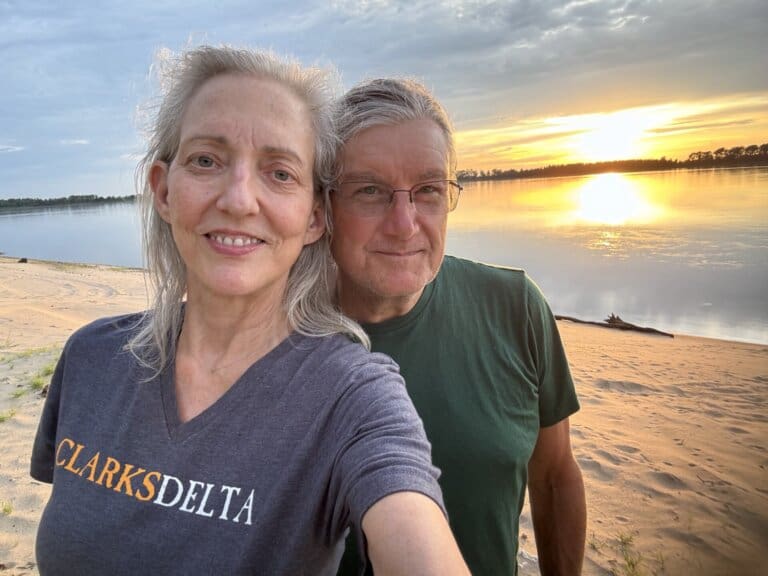
The collection of Malachis aphorisms and poems are becoming a book. In this impromptu morning exchange between Madge and Chilly Billy, they discuss the genesis of the first Malachi and what followed, finally morphing into what will soon become a published book. The title is also revealed. We would love to hear your feedback at this point in our preparation process.
Sharing morning of 7/11/25 (LISTEN BY CLICKING ON THE YOUTUBE VIDEO ABOVE)
Madge: When you wrote your first Malachi, did you know that you were going to write a bunch of them?
Billy: No clue. I didn’t know out of the 10 years I’ve been writing them…out of the over 3,000, I had no clue. I just started writing them.
The amazing thing is, I am so attention deficit; I don’t follow through on anything. I have no plan ahead of time. I don’t do goals. I don’t finish anything. And to me, and again, I don’t like, as a Christian sometimes say, well, “God told me this and told me that.” I prefer to use words like, “I feel, I feel inspired, I have a yearning to.” Things like that. But I had no clue.
When I wrote the very first one, it was very telling. Sad, begets sad. It simply was where I was at the time. And I think the first ones so embodied all the depression I was in at the time. And it is just amazing that I kept on going for 10 years and that I recorded them on an iPhone. And that I didn’t lose them, even when I lost phones and stuff. But I had no clue we would do anything with them. I mean, nothing.
It was getting something out of me that I needed to get out so that I could understand where I am. But I could have just easily thrown them away. And even numerous times, I thought about just dumping them.
Madge: So it was like you just had a feeling you had to just express it and write it down for some reason. Not just think it, but write it down and you did it by putting it into your phone into a note. And then from there, they just started to overwhelm you, and you felt the need to continue?
Billy: Why did I keep doing them? I mean, again, I don’t like saying God told me, but there seems, in retrospect, in looking back, I think He had me keep them for whatever reason, because that is not normally me. I would just as soon have thrown them in the trash.
Also, I think just the name, Malachi. I see in retrospect, is what I believe to be his hand in all of it, gently keeping the flow of them, keeping them recorded and slowly giving us wisdom as to maybe what to do with them.
I just see what I believe to be God’s hand in it for some reason, if no other reason than to help me understand myself and my position relative to Him, to others, and where I want to go in life.
All along, even until we realized the “Wrestling with Wisdom at the Crossroads” a couple of years ago, that was truly what Malachi was doing, whether he recognized he was wrestling at the crossroads, he was.
Madge: When you started this, you didn’t even know you were on a path or you were heading anywhere?
Billy: I was, I mean, I was.
Madge: You were really lost.
Billy: Basically, I was like this character named Dell in one of my favorite movies, Jeremiah Johnson, when Jeremiah Johnson comes by in the middle of Colorado. Dell is buried up to his neck and only his head is sticking out of the sand where the Native Americans had buried him to die. Basically, I was Dell in the sand, and all I had was my head up, and that’s all, and I’m looking around. That was what I envisioned. I was swamped, I was sinking, I was in a quagmire, I was in quicksand, I was dying, and for some reason, the Sad begets sad started the whole thing. Sad begets sad was probably my unrecognized cry to God; I am sad, help me, and I know I’ve ruined my life, and I blamed You for it for a long time, and I am tired of doing that. Please help me.
And it’s taken 10 years to get somewhat whole.
Madge: And where do you find yourself now as far as your relationship with God and how that has changed? I know you are clean and sober, but as far as that relational aspect?
Billy: A lot of that is due to being married to you and God putting you into my life is a stable factor for a fairly unstable person. But I think what has really been key was number one, going into recovery and getting rid of the substances that were affecting me. But that was just the beginning. That was getting rid of some of the external things that were affecting me internally. But number two, the one thing I got in recovery was starting to own what I have done wrong or what I am responsible for, even if I didn’t initiate the wrong way; but what was my response to it? And lastly, taking ownership for where I am. And that began opening my eyes and began an awakening to it’s time to quit blaming others. It’s time to take responsibility. And it’s time to really know this God I act like I know, and that I have professed since I went to Bible College and even before then. And I think that somehow in the deterministic free will kaleidoscopic dance, that God reached out to me, and I reached back to him and we have been reaching each other since then.
But so much of that came together as the genesis for doing something with all these Malachis which came out of what was an ugly time in the world, covid that destroyed a couple of our businesses, and almost killed the tours. But you and I started purposing together and covenanting to have our devotional in the morning. And I think it really started with that as far as my relationship deepening with God.
Now, I still, and I say it, and, you know, sometimes we can say things tongue in cheek, but I am about one of the sorriest folks I know. I mean, I can’t justify my heart condition, but I also can’t justify staying there. And I think in wrestling with wisdom at the crossroads, and the whole idea of the book and looking back over time, I don’t want to get caught in the past, but I want to learn from it. But “Wrestling with Wisdom at the Crossroads” is a past, present and future endeavor. And I think I’m better able to wrestle now that I really do finally want to want to please God. And that’s where it is.
I still get frustrated with myself during the day when I have thoughts of resentment and all these insecurities I have that are so ugly, but I think God is finally starting to heal so much of the hurts. I am an overly sensitive person, and I regret and often get frustrated with how I allow my sensibilities to override my sense and how I am so affected by everything. I wish I wasn’t. I also regret how I emote in front of others and the vulnerability I share, but I feel compelled to do it, whether as a writer, or as a communicator. I am essentially an introvert who operates as an extrovert, but I feel very strongly about sharing these aphorisms that Malachi Montroy has written.
I am really thinking a lot of them were given to me by God or a lot of them I may have created out of my own flesh. I don’t know where it lies. But essentially, I think it is a tale of a man who has been at many crossroads his entire life, often taking the wrong road, sometimes the right road, and even when on the right road, he didn’t necessarily know he was on the right road.
But it is in a thesis about a man who has, is and hopes to continue wrestling with wisdom, and that wisdom comes from God.
Wisdom is the first thing that God created, and he refers to it as a she. God is a he. The Holy Spirit is a he. Jesus is a he. But Wisdom is a she. And I think it just shows that we need others.
That is another thing that I found in my journey. I am not enough by myself.
But the main thing I need to get first is Wisdom. At every crossroads we come to in life, we need Wisdom’s guidance, and we can ask for it or we can choose not to. And even if we don’t ask for it, I think God, out of His goodness and grace, gives us wisdom, but we need to constantly feel a compelling to seek His guidance and to seek wisdom. Wisdom basically is the application of knowledge.
Having knowledge is not enough. Wisdom is the application of it. Basically, to get back to your question, is how has my relationship changed? I think I am finally realizing, at 65, that there is very little that matters in this world other than loving God and loving others. And he says that, and I do it so poorly. But I don’t want to continue to do it poorly. I need His help as a fallen sinful creature who has brought on a lot of angst in his life, most of it himself.
I need His help in knowing how to get help and to how to relate with Him and others. But most of this came about the relationship change came about through our daily devotional in the morning, of purposing every day to start our day with that, to praying for things that matter and things that don’t, and in saying the Lord’s Prayer, which he has told us to do. And then us reading at first through the whole Bible, and now doing a Psalm and then a Proverb, then reading something from the New Testament, and then finding a book with a very Judeo Christian philosophical worldview that we read out loud, and we discuss sentence by sentence.
I think that has opened me up to having a deeper relationship with God, even though I realize I have yet to scratch the surface. I must keep wrestling as Jacob wrestled with God.
Madge: And by sharing this journey that I have been on with Malachi, that I’m still on, by sharing it in a written form that others can look at. Do you have a message to give to people who pick up this book and read it as to how it might serve them or help them?
Billy: I don’t want to be so arrogant as to presume that anything will really come out of it. I think I am finally old enough and beat up enough and redeemed enough and thankful enough and still enough that I really don’t have any expectations for the outcome of it. I would like to get it out for posterity’s sake. I feel that you and I together feel led to do it. And I don’t have any expectations.
My hope is that folks who maybe don’t know God, will find a way to self discover God through the journey. It really is somewhat of a Bunyan Pilgrim’s Progress in a different kind of retrospective form. It’s somewhat of a tale told by, in Faulkner’s words, an idiot or a fool, signifying nothing yet signifying everything.
I hope that folks would find a nugget or two somewhere in the aphorisms that would speak to them. I hope that they understand that these were regurgitated at the moment at very differing places in my life, while I could have been depressed and really writing a lot of self-inflicted quotes or whatever came out in a state of depression. There were still bright rays of light shining in, and even during the lighter phases, there were still depressive thoughts that came in.
It chronicles the journey of a seeker, and I am hoping that those who are seeking wisdom, and let me be clear, I am not the wisdom in the book, I am wrestling with the wisdom, I am the guy that doesn’t have the wisdom that’s trying to get hold of the wisdom, and I want to grab hold of wisdom the same way that Jacob grabbed hold of God and he wouldn’t let him go the entire night. Then God finally blessed him. He also blessed him by hitting him in the thigh, and he was wounded for the rest of his life. Any encounter with God is going to affect us.
I want to want to be Jacob, who is holding on to wisdom like it is the very lifeline, which it is. It’s a lifeline in the temporal, and it’s a lifeline to the eternal. But I would hope that folks that are seekers will find something in it that may resonate while understanding that there will be a lot of aphorisms and quotes and thoughts that anybody that reads it will just try to find whatever path they’re on and see that it is possible to have done so many things to have displeased God and others over your life and still hold out for that ray of light and hope. And that’s what I would like to come out of this.
You know, we’ve broken the book up into The Hurt, which is quite a few aphorisms and thoughts and then The Hope. I think any story worth telling has to have conflict, like you see in the conflicts of literature. That’s life. But also, I don’t ever want to tell a tale that doesn’t have redemption. And the redemption in this that I hope others can see is a man who is very vulnerable and sensitive and overly emotes and can almost be embarrassing to the degree he does, but he is unable to stop. It seems like it’s worth wrestling with wisdom at the crossroads and it’s worth wrestling with things that matter and it’s worth trying to find out what matters.
And back to your question again. At 65, God has allowed me to live long enough, which I should have been dead many times over the years, but He has allowed me to realize there is so little that matters in life. We need to wrestle and figure out what matters, and then not only figure it out, then we need to will right and then do right with His help.
Madge: And so by ending this book with the self help guide, it is laying out what helped you get to a better place as far as your seeking God and your relationship with God? Your launching point so to speak, because before that, you were kind of all over the place on your paths? But then once you started studying the word and reading the Bible aloud and praying with another person, your wife, and then talking about what you were reading, it was that morning devotional which really helped to give you a launching pad for being able to understand the path you were on and the choices that you had to make. Right? And so you’ve got that there to help people maybe experience something similar to what you have to better focus your relationship with God and His with you.
Billy: Well, the appendix at the end is that study guide or help guide and it is very similar to me in thinking about it, as you mentioned it, similar to the aphorisms and the aphorisms as a whole.
Each aphorism can stand alone, but as a whole or universal, it tells a story. I compare it to a river, the same way with the study or help guide at the end, it can help one possibly know how to navigate and discuss in intimate, comfortable, vulnerable, small group settings, how to discuss the Malachis, but more importantly, on a universal note, it tells how someone else can begin or continue or strengthen their relationship with God and those that they are in intimate relationship with.
And God says, where two or three are gathered together in my name, I am there. So if two or three are gathered in His name, and following some type of loose format that honors Him and allows one to dig into the Wisdom that comes out of the Bible and to look at the many facets of it, I think it deepens their relationship with God.
So the study guide is not a “this is what you must do.” It is just an idea of encouraging others to find their own path in engaging God with each other. It is a loosely written standard operating procedure that they can customize for themselves.
Let me just ask you briefly, what do you see or hope that might come out of “Wrestling with Wisdom at the Crossroads” and the study guide and possibly what you would want to see people receive from it?
Madge: I definitely hope more people will start picking up their own Bible and reading it. But by reading it aloud with another person, it comes alive in a way that I have never experienced before. It is different than sitting in a church and hearing scripture read aloud and then going on about your day. It is a whole different experience when you sit with someone you care about and you actually read the Bible together and then you experience how that affects you and how you think about it.
It deepens my relationship with God and understanding what it is He wants of me and the directions and paths that I need to be looking for that He is showing me. I think it is vitally, vitally important for us as a people, as Christians that believe in Jesus Christ, and even those who are seeking for some higher meaning of their life, that they get together, that we get together, two or more people, and we read His word. And we talk about it, and we pray about it. I think it is vitally important.
We can use things like the aphorisms of Malachi as reflections in our own lives. We can take a random Malachi, at will, once we have read the Bible and we are not really sure what to talk about next. Let’s just pick an aphorism, and let’s just throw it out there. Let’s read it, and let’s discuss, what does that mean? What do I think that means? How does that affect me in my life? Does it affect me? Do I even care? Even having simple thoughts like that, that is pleasing to God, that we are looking for meaning in our life and our meaning in our life is being focused on a journey that ultimately is with Him. But if we are not even questioning what we are doing on that path and that journey, then we may not even be aware that we are on a journey.
So I think, because it has blessed me so much to do these devotionals with you and to read the Bible aloud together, I think, as a society, as a people, we have gotten away from that. It is time to wake up and to realize this time is moving by quickly.
Billy: It’s a short ride.
Madge: If we don’t start seeking Him and reading His word and understanding what it is He is saying and how it applies to us, then we are lost. So that is my hope for it. That is my hope in how they will use it. And I pray it blesses many. Many.
Billy: While you were speaking, I was thinking about when I went through this high plains writing project that was part of the national writing project. I learned then that somebody could say, well, tell me a story. I can’t tell you a story. I need a prompt. And I think so much of that is the same in life.
You just need to read your Bible. Well, yeah, we do, but how do we start? How do we do it? Having a prompt helps. So the Malachis in a very temporal sense can operate as a catalyst for discussion, but also having a guide at the end helps people that are unfamiliar with doing something like that.
We had to be vulnerable when we first started. It was hard praying in front of you. What’s my wife going to think about me? But we did it. And then, it can be a vulnerable start, but it’s an important first step. I think that just having a loose guide, can give them a prompt to know how to go about approaching God and His Word and how to begin, just even communicating with one another about things that matter, not just, which all are good, how did work go today? what did the children do? what did they learn at school? what did you eat? all of that? That’s important everyday living but it’s not the ephemeral deep things that we so often neglect along with that.
It is not just a guide, but what the guide references, which is how to get to know God better and to do it in settings to where we become more familiar with His word. And, you know, when we say the word, we’re talking about the Bible, but it’s also, I think, pretty incredible with all the paradoxes in the Bible that Jesus is God. Wisdom is the first thing that was created, and Jesus is referred to as the Wisdom of God. So if that’s where Wisdom is, and that is where it begins, then we need to begin wrestling with it.
Please comment and share and subscribe.
Comments
Good morning. Just read all the above and will look forward to getting the book. My comment on your journey is that it confirms what I see in my life. My life is defined by, and understood by, my relationships. To the degree I am able to build ‘healthy’ relationships, with God or Man, determines what I ‘see’ in the world and to experience the fullness (the height, width, and depth) of all God intends for me in His creation. As you have described, it becomes the path to wisdom. In a profound way ‘relationship’, and its contribution to mankind, IS life. It is essential. It may even offer insight to the question, “why did God choose to create Man at all?”; He certainly didn’t ‘need’ us. And it also leads me to understand how my engagement in isolation becomes the antithesis of relationship/life. Love y’all!
Thx, Jeff! Well said! 🙏❤️😃